MBBS in Mauritius: Your Complete Pathway to a Global Medical Career

Why Choose Mauritius for Your Medical Degree?
Mauritius has emerged as a premier destination for international students pursuing medical education. The MBBS in Mauritius program offers world-class infrastructure, English-medium instruction, and globally recognized degrees. Every year, hundreds of aspirants decide to study MBBS in Mauritius because of its affordability, safety, and high academic standards.
The island nation follows a curriculum aligned with international medical councils like the WHO, NMC (India), and GMC (UK). If you want to study medicine in Mauritius, you benefit from a multicultural environment, tropical climate, and clinical exposure starting early in the program. Unlike many Western countries, the MBBS in Mauritius does not require entrance exams like the MCAT, making admission smoother.
Moreover, Mauritian medical universities are recognized by UNESCO, FAIMER, and ECFMG. This means after completing your MBBS in Mauritius, you can appear for licensing exams like USMLE, PLAB, or NEXT (India). The low crime rate and Indian-origin population make it especially comfortable for South Asian students who wish to study MBBS in Mauritius.
Another compelling reason to study medicine in Mauritius is the direct patient interaction in affiliated teaching hospitals. Students gain hands-on experience from the third semester onward, a feature rarely available in many Asian medical colleges. With a high passing rate in foreign medical exams, the MBBS in Mauritius is steadily becoming a preferred choice.
MBBS in Mauritius: An Overview of Top Medical Universities
Below is a comparative table of leading universities offering MBBS in Mauritius, followed by bullet points on key highlights.
| University | Established | Duration | Tuition Fees (USD/year) | Recognition |
|---|---|---|---|---|
| Anna Medical College, Mauritius | 2012 | 6 years | ~8,000 – 9,000 | WHO, NMC |
| SSR Medical College, Mauritius | 2019 | 6 years | ~9,000 | NMC, WHO |
Key Highlights of MBBS in Mauritius:
Medium of instruction: English throughout the course.
Clinical rotations: Available in multi-specialty hospitals.
Batch size: Limited seats (80-120 per university)
Global mobility: Degree valid in US, UK, Canada, Australia, India.
Affordable living: $300–500 per month including accommodation.
No donation or capitation fee to study MBBS in Mauritius.
Faculty: Mix of local and visiting professors from Europe/India.
When you study medicine in Mauritius, you also get access to research labs and simulation centers. The curriculum integrates problem-based learning (PBL), which is a major advantage for students aiming to clear international licensing exams.
Framework for Medical Education in Mauritius
Mauritius regulates its medical education through a structured framework aimed at meeting global training standards. Approved by the Tertiary Education Commission (Mauritius) (TEC) on 31 July 2008, the Framework for Medical Education in Mauritius defines the minimum requirements any medical college must satisfy to offer an MBBS programme. This framework guarantees that institutions uphold high standards in infrastructure, faculty, laboratories, and clinical training.
Purpose and Structure of the Framework
The main objectives of the Framework for Medical Education in Mauritius are to:
- Provide a regulatory environment for medical education in Mauritius
- Ensure high-quality medical training and academic standards
- Define minimum infrastructure and staffing requirements for medical colleges
- Establish guidelines for clinical training in teaching hospitals
- Maintain quality assurance through regular accreditation
All institutions wishing to establish a medical college in Mauritius must comply with these requirements. The framework is divided into two major components:
- Non-Clinical Component: Focuses on academic and infrastructural requirements, including college infrastructure, teaching laboratories, faculty qualifications, and academic departments for pre-clinical and para-clinical training.
- Clinical Component: Defines standards for clinical training in teaching hospitals, including patient exposure, clinical teaching, and hospital infrastructure.
Minimum Standards and Mandatory Departments
The framework outlines minimum standards for a medical college that admits 150 MBBS in Mauritius students per year. Each medical college must have a fully equipped campus, associated teaching hospital, qualified staff, laboratories, and clinical facilities.
Every medical college offering an MBBS in Mauritius programme must establish these departments:
- Pre-Clinical Departments: Human Anatomy, Human Physiology (including Biophysics), Biochemistry
- Para-Clinical Departments: Pathology (including Blood Bank), Microbiology, Pharmacology, Forensic Medicine including Toxicology, Community Medicine
- Clinical Departments: General Medicine, Paediatrics, Psychiatry, Dermatology, Chest Diseases, General Surgery, Orthopaedics, Radio-Diagnosis, Radiotherapy, ENT, Ophthalmology, Obstetrics and Gynaecology
All medical faculty members must hold recognized qualifications and be registered with the Medical Council of Mauritius. Through this framework, Mauritius ensures high-quality study medicine in Mauritius experiences for all students.
Eligibility Criteria to Study MBBS in Mauritius
To secure admission for MBBS in Mauritius, international students must meet specific academic, age, and health requirements set by both the Mauritius Tertiary Education Commission (TEC) and individual medical universities. Below are the three main MBBS Mauritius eligibility parameters you need to fulfill before applying to study MBBS in Mauritius.
Academic Requirements
To pursue MBBS in Mauritius, you must have completed 10+2 or equivalent with Physics, Chemistry, and Biology. The minimum aggregate score is 50% for general category and 45% for reserved categories (as per NMC guidelines for Indian students). Some universities also require English as a compulsory subject. If you plan to study medicine in Mauritius, a strong background in Biology is essential.
Age and Entrance Exam Criteria
You must be at least 17 years old by December 31st of the admission year. Unlike many countries, the MBBS in Mauritius does not mandate the MCAT or NEET for direct admission. However, Indian students must qualify NEET (as per NMC rules) to be eligible to study MBBS in Mauritius and later practice in India.
Health and Language Proficiency
A medical fitness certificate is mandatory. Since the medium is English, non-native speakers may need IELTS (6.0) or TOEFL (80) scores, though many universities waive this if your prior education was in English. To study medicine in Mauritius, you also need a valid passport and student visa, which the university typically sponsors.
5. Admission Process for MBBS in Mauritius
Follow these bullet points for a step-by-step guide to study MBBS in Mauritius:
- Step 1 – Research: Shortlist universities recognized by your home country’s medical council.
- Step 2 – Application: Fill online application form on university website with scanned copies of mark sheets, passport, and photo.
- Step 3 – Offer Letter: Receive conditional/unconditional offer letter within 2 weeks.
- Step 4 – Fee Payment: Pay the first semester tuition to confirm your seat for MBBS in Mauritius.
- Step 5 – Visa Application: Submit visa application to Mauritius High Commission with offer letter, fee receipt, medical, and bank statements.
- Step 6 – Travel: After visa approval (4–6 weeks), book flights. Universities provide airport pickup.
- Step 7 – Arrival & Registration: Complete enrollment and get student ID for study medicine in Mauritius.
- Step 8 – Start Classes: Attend orientation and commence semester.
Most universities have two intakes: January/February and August/September. To study MBBS in Mauritius, apply at least 4–6 months before the intake.
Curriculum Structure to Study Medicine in Mauritius
Pre-Clinical Phase (Years 1–2)
The first two years of MBBS in Mauritius focus on basic sciences:
- Human Anatomy
- Physiology
- Biochemistry
- Pathology
- Microbiology
- Pharmacology
Teaching methods include lectures, cadaveric dissection, and lab work. Examinations are held every semester, and you must pass theory and practicals separately. To successfully study medicine in Mauritius, attendance above 75% is mandatory.
Clinical Phase (Years 3–6)
Years 3 to 5 cover system-based medicine:
- Medicine & Surgery
- Pediatrics & Gynecology
- Psychiatry & Dermatology
- Radiology & Anesthesiology
- Community Medicine & Ethics
The final year is a rotating internship in affiliated hospitals. You will manage real patients under supervision. This hands-on training is the hallmark of MBBS in Mauritius. After completing 12 months of clinical rotation, you graduate with an MD-equivalent degree. Many students choose to study medicine in Mauritius specifically for this early clinical exposure.
Tuition Fees and Cost of Living for MBBS in Mauritius
The total cost to study MBBS in Mauritius ranges from $35,000 to $60,000 for the full course, depending on the university.
Fee Breakdown (Per Year)
- Tuition fees: $7,000–12,000
- Hostel accommodation: $1,200–2,400
- Food & utilities: $1,500–2,500
- Health insurance: $200–400
- Books & supplies: $300–500
Additional Points on Saving Money
- Part-time work is allowed up to 20 hours per week during semesters and full-time during breaks.
- Many students tutor juniors or work in university libraries.
- Shared apartments cost 40% less than hostel single rooms.
- Cooking Indian food at home reduces monthly food bills to $150.
When you opt for MBBS in Mauritius, remember that tuition is paid semester-wise, so financial pressure is lower. Several banks offer education loans specifically for students who study medicine in Mauritius.
Top Universities for MBBS in Mauritius
SSR Medical College
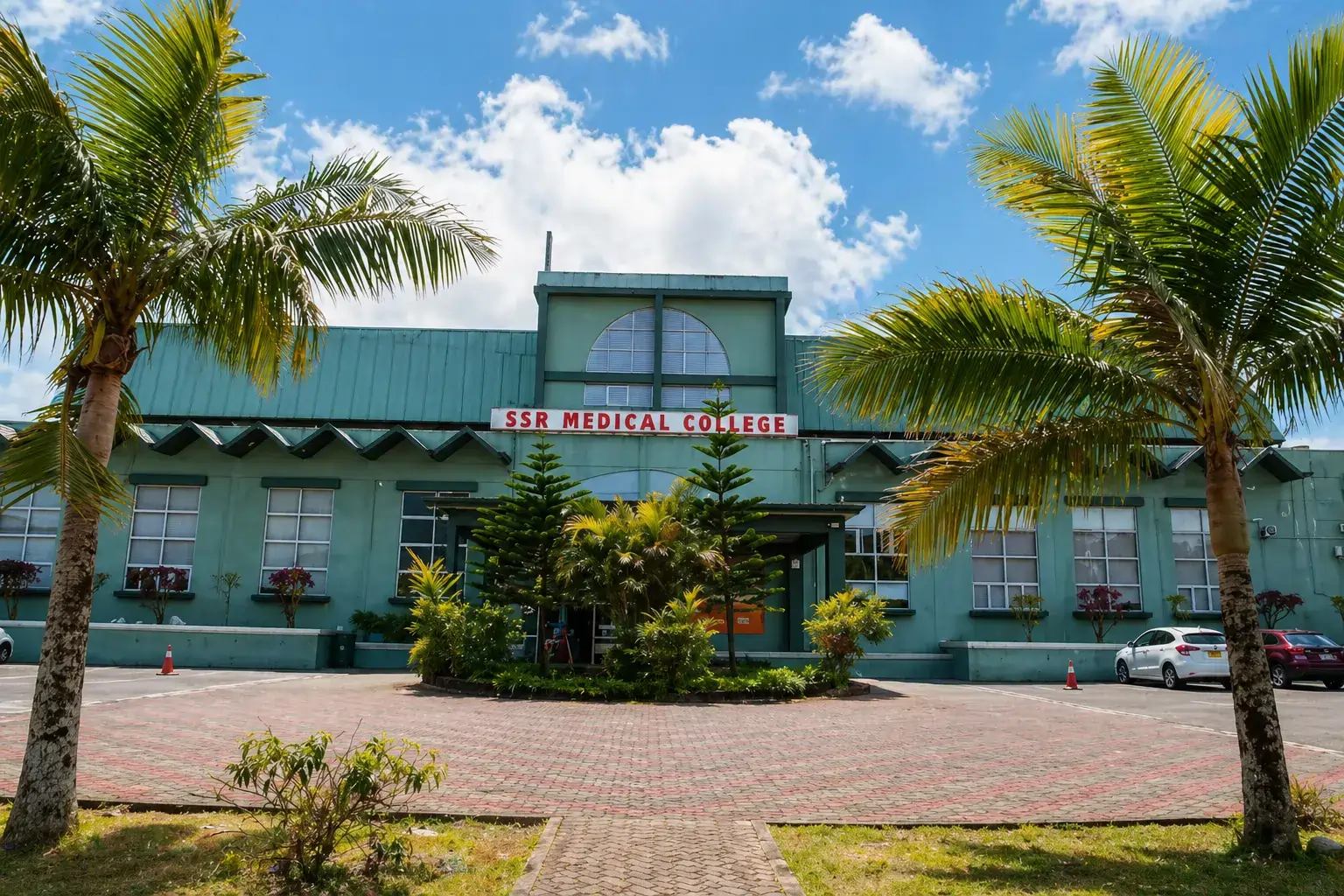
SSR Medical College is one of the leading institutions for MBBS in Mauritius and is particularly popular among Indian and international students. The college is known for its English-medium curriculum, modern campus infrastructure, and student-friendly academic environment. Many students prefer SSR Medical College because it offers a structured medical program designed to meet international educational standards.
A major advantage of studying at SSR Medical College is the strong clinical exposure provided through affiliated hospitals, including Sir Seewoosagur Ramgoolam Hospital, one of the largest healthcare institutions in Mauritius. Students receive practical training, patient interaction, and hands-on clinical experience during the later years of the course.
The college also provides well-equipped laboratories, anatomy facilities, lecture halls, and experienced faculty members. For students planning to appear for FMGE/NEXT, USMLE, or PLAB after graduation, SSR Medical College is considered a suitable option because of its globally oriented curriculum.Anna Medical College
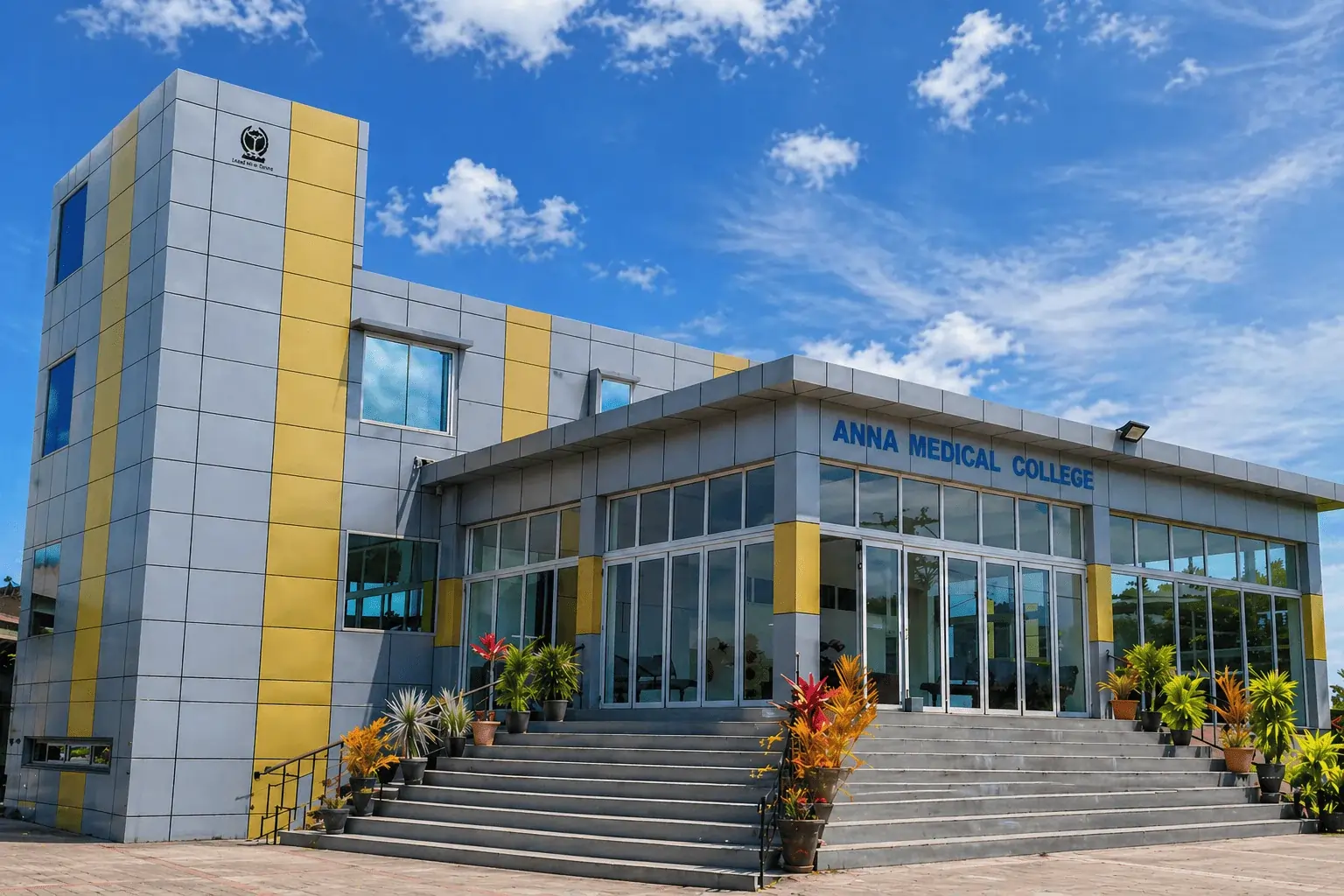
Anna Medical College is another respected option for students pursuing MBBS in Mauritius. The institution has gained attention for its quality education, modern teaching methods, and affordable fee structure compared with many private medical colleges in other countries.
The college offers advanced laboratories, qualified faculty members, and English-medium instruction, making it convenient for international students. The academic structure focuses on both theoretical learning and clinical training, helping students build a strong foundation in medical sciences.
Students who choose Anna Medical College benefit from studying in a peaceful and multicultural environment. The college is often preferred by students looking for cost-effective overseas medical education with good academic standards and supportive campus life.
Career Opportunities After MBBS in Mauritius
Completing your MBBS in Mauritius opens multiple global career paths. Graduates are eligible to take:
- NEXT (India) – for practice in India after clearing FMGE/NEXT.
- USMLE (USA) – for residency in America.
- PLAB (UK) – for GMC registration.
- AMC (Australia) – for Australian medical licensing.
- MCCQE (Canada) – for Canadian residency.
Approximately 85% of students who study MBBS in Mauritius clear their home country’s licensing exam within 2 attempts. Many universities provide coaching for these exams as part of the curriculum. Alternatively, you can join postgraduate studies in Mauritius itself or work in private hospitals in Africa, the Middle East, or Southeast Asia.
The starting salary for a fresh graduate after MBBS in Mauritius ranges from $30,000 to $60,000 per year, depending on the country of practice. Additionally, you can pursue MD in internal medicine, surgery,Pediatrics or radiology from European or Australian universities, as the degree is recognized.
Scholarships and Financial Aid to Study MBBS in Mauritius
Many students worry about finances when planning to study MBBS in Mauritius. Fortunately, several scholarships exist.
| Scholarship Name | Eligibility | Award Amount |
|---|---|---|
| Mauritius Government Scholarship | Top 5% in high school | Full tuition + stipend |
| University Merit Scholarship | 90%+ in PCB | 25–50% tuition waiver |
| Commonwealth Scholarships | Commonwealth citizens | Partial to full funding |
| Need-based Financial Aid | Family income < $10,000/year | Up to 30% fee reduction |
In addition to scholarships, education loans from Indian banks like SBI, HDFC Credila, and Avanse cover up to 100% of the cost for MBBS in Mauritius. Some universities allow installment payments without interest. If you choose to study medicine in Mauritius, always ask the international admissions office about work-study programs, which let you earn while learning.
Final Thoughts
Choosing to pursue MBBS in Mauritius can be a life-changing decision. With affordable fees, English-medium instruction, global recognition, and a safe environment, it ranks among the best overseas destinations for medical aspirants. Whether you want to study MBBS in Mauritius for a career in India, the UK, or the US, the pathway is well-established. The opportunity to study medicine in Mauritius also gives you cultural diversity, travel experience, and exposure to tropical medicine—adding unique value to your CV.
Start your application process today, and take the first step toward becoming a globally competent physician. The demand for MBBS in Mauritius is rising, so secure your seat early.
Frequently Asked Questions
Why choose Mauritius for MBBS?+
Affordable fees, English-medium instruction, no MCAT required, early clinical exposure, safe environment, and degrees recognized by WHO, NMC (India), and GMC (UK).
Is NEET required for Indian students?+
Yes. Indian students must qualify NEET to be eligible to study MBBS in Mauritius and later practice in India.
What is the eligibility criteria?+
10+2 with Physics, Chemistry, Biology (50% aggregate for general, 45% for reserved categories). Minimum age: 17 years.
What is the total tuition fee?+
300–500 per month (includes accommodation, food, utilities).
Can I work part-time while studying?+
Yes. Up to 20 hours/week during semesters and full-time during breaks.
What is the duration of the MBBS program?+
5.5 to 6 years, including a 12-month rotating internship.
Which are the top universities?+
SSR Medical College and Anna Medical College.
What career options are available after MBBS?+
Appear for NEXT (India), USMLE (USA), PLAB (UK), AMC (Australia), or MCCQE (Canada); or pursue MD/postgraduate studies.
Are scholarships available?+
Yes. Examples: Mauritius Government Scholarship (full tuition + stipend), University Merit Scholarship (25–50% waiver), need-based aid (up to 30% fee reduction).